

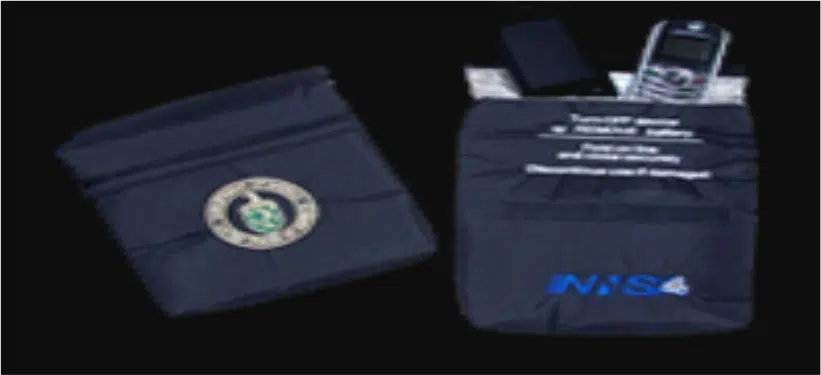
 Preserving digital evidence is a critical step for investigators, forensic analysts, and cybersecurity professionals who handle sensitive electronic devices. In recent years, Faraday bags have become a key tool in ensuring the reliability and integrity of digital evidence by preventing external tampering or remote data destruction. But can Faraday bags fully deliver on their promise? To answer clearly and precisely, let’s examine how they work, their practical limitations, and exactly how to use them effectively in real-world scenarios.
Why Evidence Preservation Depends on EMI Isolation
When an electronic device, such as a smartphone or tablet, is seized during an investigation, investigators face immediate pressure to prevent remote data tampering or wiping. Many mobile devices support remote commands for data deletion, encryption activation, or other evidence destruction techniques. Consider a scenario where law enforcement seizes a suspect’s smartphone, knowing that the suspect or accomplices could remotely trigger a data wipe via a simple web command or through automated scripts activated by external signals. Any tampering or loss of data before the device reaches the forensic lab can severely compromise an investigation.
A properly designed Faraday bag acts as an electromagnetic barrier, immediately isolating the device from external radio-frequency signals. This electromagnetic isolation blocks cellular, Wi-Fi, Bluetooth, GPS, RFID, NFC, and other wireless communication channels, ensuring that critical digital evidence remains unchanged from the moment of seizure until forensic analysis begins.
How Faraday Bags Provide Immediate Protection
Faraday bags achieve their protective properties through a conductive material layer, typically a metalized fabric constructed from copper, nickel, or silver threads. When sealed, this conductive enclosure creates a continuous electromagnetic shield around the device inside.
For example, during a federal investigation involving a financial fraud case, an investigator seized multiple mobile devices suspected of containing sensitive data about fraudulent transactions. By immediately placing these devices inside Faraday bags upon seizure, the investigator ensured no external command, malicious app update, or remote encryption trigger could reach the devices. Thus, the chain of custody remained secure, and the digital evidence remained intact and legally admissible.
Why Proper Use of Faraday Bags Matters?
One notable incident occurred during a corporate espionage investigation involving stolen intellectual property. Investigators seized the suspect’s tablet and smartphone but failed to shield the devices correctly. Within minutes, a remote wipe command was triggered via a Wi-Fi signal, deleting critical text messages and emails. The loss significantly weakened the prosecution’s case, highlighting the vital need to use Faraday bags immediately upon seizure.
In another case, forensic analysts correctly placed a smartphone suspected of containing incriminating evidence inside a high-quality Faraday bag directly at the scene. Investigators later uncovered remote wipe commands repeatedly sent to the device via cellular and Wi-Fi networks, commands that failed to execute due to the shielding effect of the Faraday bag. The preserved data ultimately became pivotal evidence in securing a conviction.
These examples underscore the critical role Faraday bags play in modern digital investigations. Investigators, forensic professionals, and cybersecurity teams who integrate Faraday bags into their standard procedures significantly reduce risks associated with external tampering or evidence loss.
Practical Limitations You Must Consider
Although highly effective, Faraday bags are not a standalone solution, nor are they perfect.
- Internal Device Processes Still Occur:Faraday bags stop external signals, but internal encryption timers, pre-programmed device lockouts, or scheduled data deletions continue. In a recent digital investigation involving encrypted messaging apps, investigators placed a seized device into a Faraday bag only to find it locked by an internal security protocol hours later. To avoid losing critical evidence, forensic teams must still quickly perform data extraction after reaching a secure forensic lab.
- Protection Only Against External Signals:Faraday bags cannot prevent physical damage, exposure to extreme temperatures, or water intrusion. During a recent transport, investigators placed a device in a Faraday bag but left it improperly packaged, allowing physical impacts that caused hardware damage. Professionals must always couple EMI shielding with appropriate physical protection.
- Quality of the Bag is Crucial:Low-quality bags or improperly sealed bags can fail to isolate signals effectively. A cybersecurity analyst recently tested several budget Faraday bags and found measurable leakage at higher frequencies like LTE and 5G bands. Therefore, forensic professionals must use bags tested and verified by reputable laboratories, ensuring consistent shielding performance across all relevant frequency bands.
Effective Shielding Means Reliable Digital Evidence
The effectiveness of Faraday bags in preserving digital evidence is well established, proven by practical field use, and reinforced by forensic standards. They offer immediate, reliable protection against external interference. Still, their effectiveness depends heavily upon proper use, understanding practical limitations, and adhering to stringent handling protocols.
For investigators, forensic professionals, and cybersecurity teams who handle sensitive electronic devices, employing quality Faraday bags properly from the moment of seizure through forensic analysis is the most effective way to ensure digital evidence integrity and admissibility in court. By carefully integrating these practices into standard procedures, professionals can confidently mitigate risks and strengthen investigative outcomes.